Adjusting to a diagnosis you do NOT want to adjust to

by Carolyn Thomas    ♥    @HeartSisters

Like many heart patients, I began to notice that my cardiac diagnosis seemed to alter my own best-before date.  It was almost as if I’d been one person for over 50 years before being misdiagnosed and sent home in mid-heart attack, and then one morning (after flying home to the west coast from Ottawa and two more cardiac episodes on that flight)  – I somehow became a completely different person. Once home, I returned to the Emergency Department (and a different Emerg doc) where I was finally correctly diagnosed and treated.  I had presented with the same textbook symptoms that had been misdiagnosed earlier (central chest pain, nausea, sweating and pain down my left arm) – but this time a cardiologist was immediately called in. 

Turns out I wasn’t alone: the late sociology researcher Dr. Kathy Charmaz called this health-related shift in a patient’s emotional state “the loss of self“.    

For most of us, this strange new state of adjustment is temporary. Temporary, but scary.    Continue reading “Adjusting to a diagnosis you do NOT want to adjust to”

The familiar self, the unfamiliar self and the recovery of self

by Carolyn Thomas     @HeartSisters   

As Bruce Springsteen once sang, “You get used to anything. Sooner or later it just becomes your life.”(1)  Bruce was right. Since being diagnosed with heart disease in 2008, I’ve observed a bizarre and surprising change in my ability to adjust to ongoing cardiac symptoms. My symptoms have not changed. But at some point, I just got better at adjusting to them.

In fact, I suspect that the chest pain which just feels “normal” to me by now would make most other people head straight to the Emergency Department.      .       .      Continue reading “The familiar self, the unfamiliar self and the recovery of self”

Unlikely companions: grief and gratitude

by Carolyn Thomas    ♥   @HeartSisters

Whether we plan to or not, we often end up re-creating ourselves after a significant health crisis. Researchers like Dr. Kathy Charmaz call this phenomenon the loss of self, a type of grief experienced while we’re learning to somehow adapt and adjust to an unfamiliar new life.

Nothing is as unfamiliar to us right now as the profound changes introduced by the COVID-19 virus.  And just as Dr. Charmaz identified in those of us with chronic illness, we can also  experience this loss of self during a global pandemic.            .   Continue reading “Unlikely companions: grief and gratitude”

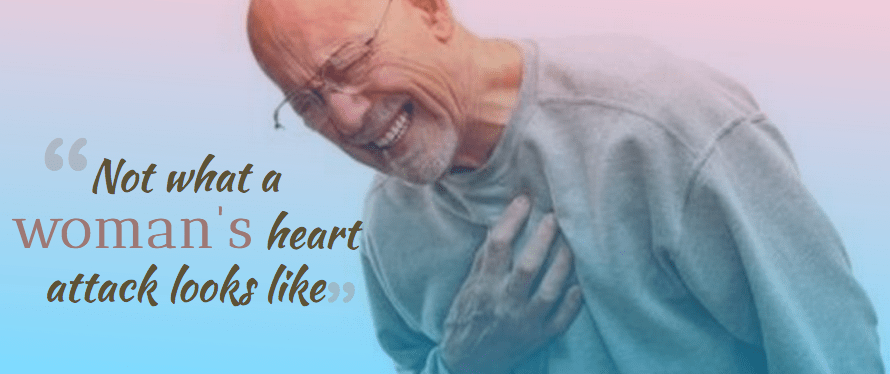
This is NOT what a woman’s heart attack looks like

View Post

thatguy2.png.This is a man told by the photographer to act like he’s having a heart attack.


by Carolyn Thomas    @HeartSisters

One of the reasons that I knew I wasn’t having a heart attack (even while I was actually having one) was my very inaccurate stereotype of what a woman’s heart attack can look like.

I used to think that heart attacks happen only to men. Old men. Mostly out-of-shape chain smokers and heavy drinkers.  Old, out-of-shape, smoking, drinking men, who one day out on the golf course suddenly clutch their chests in agony and keel over, unconscious. CPR. 911. Golf buddies yelling. Ambulance sirens. Paramedics. Defibrillator paddles. That’s a heart attack, right?

Wrong, my dear heart sisters. That’s NOT a heart attack.  Continue reading “This is NOT what a woman’s heart attack looks like”