Say what? Do patients really hear what doctors tell them?

by Carolyn Thomas  @HeartSisters

headHEARTDuring my heart attack, I was taken immediately from the E.R. to the O.R. for emergency treatment for a blocked left anterior descending coronary artery.  But, overwhelmed and terrified, I knew nothing of what was about to happen to me, even though I have a vague memory of the cardiologist explaining something to me before I was taken upstairs.

I could see his lips moving and I could hear sounds coming out of his mouth, but he could have been speaking Swahili.  I don’t think I was capable of comprehension at the time. Everything I know about surviving what’s known as the widowmaker heart attack, I learned much, much later.

I’m not alone. This study suggested that most heart patients believe that their cardiac interventions have far greater benefits than they actually do. Continue reading “Say what? Do patients really hear what doctors tell them?”

The heart patient’s chronic lament: “Excuse me. I’m sorry. I don’t mean to be a bother…”

by Carolyn Thomas  @HeartSisters

Two weeks before being hospitalized with a heart attack, I was sent home from the Emergency Department of that same hospital with an acid reflux misdiagnosis, despite presenting with textbook heart attack symptoms like chest pain and pain radiating down my left arm.  

At that first visit, I left for home feeling embarrassed and apologetic because I’d just wasted five hours of their valuable time. I felt so embarrassed, in fact, that I even sent the staff in Emergency a sheepish little thank you note the following day, apologizing once again for making such a fuss over nothing.

Not making a fuss is a valued trait for many of us strong women, but this tendency can cause disastrous cardiac outcomes when it makes us reluctant to seek immediate medical attention when we need it most.  Continue reading “The heart patient’s chronic lament: “Excuse me. I’m sorry. I don’t mean to be a bother…””

Which one’s right? Eight ways that patients and families can view heart disease

by Carolyn Thomas   ♥  @HeartSisters

An interesting phenomenon that I used to observe in bereaved family members during my years working in hospice palliative care is the range of personal grieving styles, and the resulting conflicts over the “right way” to grieve.     Continue reading “Which one’s right? Eight ways that patients and families can view heart disease”

My love-hate relationship with my little black box

by Carolyn Thomas    @HeartSisters

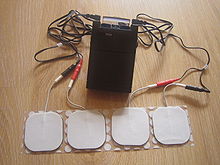
Every morning, I clip it onto my belt, or tuck it into a hip pocket.  I very carefully attach its sticky little electrode pads onto the skin just over my heart, tucking their long black wires under my clothing. Lately, I also have to hold the electrodes in place on my skin with surgical tape because they’re starting to lose their stickiness after so much daily wear. I turn on the black box at my waist, and adjust its two knobs to the correct power levels. I feel a prickly little buzz pulsating across my chest.

It’s called Transcutaneous Electrical Nerve Stimulation (TENS), and it involves electrical impulses called neuromodulation to treat the chest pain (angina) of Inoperable Coronary Microvascular Disease (MVD) – a disorder of the smallest of the coronary arteries (too small to stent, too small to bypass).

My portable TENS unit is about the size of an average cell phone. You may know the much larger version of this machine if you’ve ever had physiotherapy treatments following a muscle injury.  The only wounded muscle it’s working on for me now, however, are those in my heart. Emerging cardiac research is showing that, just as the TENS machine works on improving blood flow, reducing inflammation and speeding up healing for an injured shoulder or knee, it may bring the same benefits to heart patients with MVD like mine.

But I do have a love-hate relationship with my little black box.  Continue reading “My love-hate relationship with my little black box”