Creating a coping strategy: the second stage of heart attack recovery

by Carolyn Thomas   @HeartSisters

Earlier this week, I revisited Dr. Wayne Sotile’s excellent book, Thriving With Heart Disease – a favourite of mine since I discovered it several months after my own heart attack, and particularly the book’s second chapter, The Four Stages of Heart Illness.  Dr. Sotile, a cardiac psychologist, describes the newly diagnosed heart patient’s journey through a series of four separate stages.

Dr. Sotile believes that your recovery will have fewer surprises if you are familiar with these commonly-experienced stages and know what to expect.  The stages may not occur in any particular order.

Today, we consider the second stage of cardiac recovery*:

Stage 2:  Creating a Coping Strategy Everyone starts to grasp what heart illness is, what’s involved in treatment and recovery, and that the patient and family must work as a team.

According to Dr. Sotile, once your heart condition has stabilized and your fears of imminent death have eased, you start asking:

“What happens next?”  Continue reading “Creating a coping strategy: the second stage of heart attack recovery”

Are you the quarterback of your own heart health team?

by Carolyn Thomas

Karla Marburger is a self-described “Type A computer geek”, a Nebraska woman who is also a survivor of both congestive heart failure and acute renal failure at the age of 43.

I first met Karla along with 45 of our heart sister companions when we attended the 2008 WomenHeart Science & Leadership Symposium for Women with Heart Disease at the world-famous Mayo Clinic. Exactly one year after that amazing training experience, she announced:

“Today, I’m going to a bridal shower — my bridal shower. Two weeks from today, I am getting married to John!

When she first met John, she reported that she was concerned about how he would feel about dating someone with heart problems, someone with dietary restrictions that make it hard to go out to eat, someone who sleeps with oxygen every night, someone who is stubborn about protecting her workout time – and someone who was still healing emotionally from this experience.

“After 2-3 dates of watching me order my meals and scheduling our dates around my workouts, John started commenting on my healthy lifestyle. Not yet ready to trust him with the whole picture, I alluded to a ‘major lifestyle change’, but left it at that.”

But as their relationship turned serious, Karla knew that she had to talk to him about the full picture of her heart condition. She explained:

“He handled the conversation very positively. For John, my heart disease is not a blot on my future. Instead, he treats it as part of my life that has shaped the woman that I am today. And, we help each other by cooking and eating right.”

Karla has become a true expert in cooking and eating right, by the way.  Since her hospitalization in 2007, she has lost over 100 pounds as part of her heart-healthy lifestyle makeover.   Continue reading “Are you the quarterback of your own heart health team?”

Why aren’t female heart attack survivors showing up for cardiac rehab?

by Carolyn Thomas  @HeartSisters

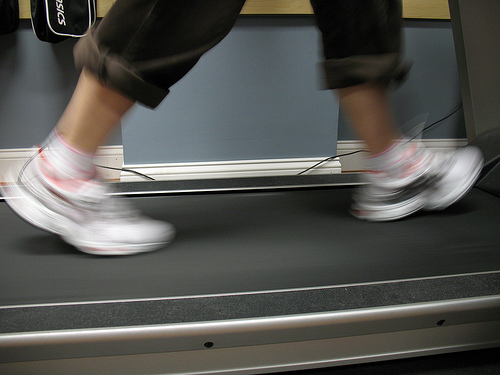
After a cardiac event, a 2-6 month program called cardiac rehabilitation can help survivors gradually improve their physical fitness, learn about nutrition, meet other heart patients, and get support to quit smoking,  lose weight or make other heart-healthy lifestyle changes to improve heart health. Cardiac rehab can reduce mortality by 25-40%, reduces angina symptoms, increases functional capacity, improves lipid (cholesterol) levels, reduces smoking by 25%, enhances psychological well-being, and improves exercise tolerance for all – including the elderly, frail or people with congestive heart failure.

Cardiac rehabilitation really works!  We know that completing a program of cardiac rehab can be very effective in reinforcing improved habits.  A 2001 University of Calgary research team lead by Dr. Kathryn King found that six months after finishing cardiac rehab, participants demonstrated higher health maintenance expectations and overall behaviour performance scores – and these indicators continued to improve over time.

But when I did a 4-month stint at cardiac rehabilitation after my own heart attack, I was vastly outnumbered by male participants, and was also one of the youngest in the group by at least two decades. Where did all the women go?  Continue reading “Why aren’t female heart attack survivors showing up for cardiac rehab?”

A post-heart attack checklist

You’ve just experienced a heart attack or other type of cardiac event.  You’re overwhelmed and frightened and wondering what happens next on this journey towards recovery. Knowledge is power – here’s when you need to take charge of that recovery by learning everything you possibly can about your heart health.

Complete this important checklist to make sure you are on the right road.  Continue reading “A post-heart attack checklist”