Why taking a shower is so exhausting for heart attack survivors

by Carolyn Thomas  @HeartSisters

After being discharged from hospital following my heart attack, I was utterly gobsmacked by how exhausting even the most basic of daily activities now felt.  Taking a shower was a memorable example.  It left me feeling surprisingly weak, shaky and gasping for breath.

In fact, a routine shower usually meant a 20-minute lie down afterwards just to recover. That’s when I first read about METS*.

METS stands for “metabolic equivalents.” Different daily activities are assigned different MET levels depending on how much physical energy they take to do (see the list below).  Continue reading “Why taking a shower is so exhausting for heart attack survivors”

Are you too hard on yourself?

by Carolyn Thomas  @HeartSisters

I'm the little blonde standing up...
   I’m the little blonde with the funny haircut

When I was a little girl in the 1950s, my parents were stingy with praise and magnanimous with criticism. To be otherwise would result in a child developing a “swelled head”, which, as all parents knew back then, would be the worst possible thing that could ever happen to any child.

“She really thinks she’s SOMEBODY!” was a phrase delivered with withering contempt by my mother in describing any person whose sense of self-esteem seemed even remotely healthy.

Nobody, according to my parents, likes a kid with a swelled head. The only way to prevent that catastrophe was to be tough on your children, and in turn teach them to be equally tough on themselves. You could thus help them avoid growing up to be spoiled and self-indulgent adults who acted like they were “SOMEBODY!”

But Dr. Kristin Neff, who teaches at the University of Texas at Austin, now believes that children who grow up like this end up experiencing little self-compassion when life’s difficulties hit them. Her book Self-Compassion: The Proven Power of Being Kind to Yourself will  sound reassuring to those of us living with a heart disease diagnosis.  Continue reading “Are you too hard on yourself?”

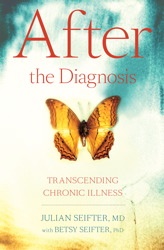
“After The Diagnosis”: two books, same title, one hope

by Carolyn Thomas    ♥  @HeartSisters

A never-married Catholic priest offers marriage counselling to couples. A childless shrink spouts advice on how to raise toddlers. Oprah Winfrey talks about money problems. “You have no clue!” – I want to scream at them. As a heart attack survivor, I now tend to gravitate towards those who are able to practice what they preach based on actual personal experience – not what they have learned at arm’s length. Clinical psychologist Dr. Elvira Aletta, for example, has been diagnosed with not one but two chronic diseases. Dr. Stephen Parker is a cardiac psychologist who is also a heart attack survivor.

And recently, I’ve come across two authors of books on coping with chronic illness that, ironically, share the same main title, After The Diagnosis:

  • Kidney specialist and Harvard prof Dr. Julian Seifter was diagnosed with Type 1 diabetes when he was a young medical intern.
  • Dr. JoAnn Le Maistre received her PhD in clinical psychology, delivered a baby daughter, and learned she had multiple sclerosis  – all within a few months.

What these authors have to share with heart attack survivors and others diagnosed with a chronic illness is quite profound. Here’s why: Continue reading ““After The Diagnosis”: two books, same title, one hope”

How we adapt after a heart attack may depend on what we believe this diagnosis means

by Carolyn Thomas     @HeartSisters

There are at least 12 commonly used measurement tools available to the medical profession that look at how patients navigate “the search for meaning in chronic illness”. Clinical tools like the Psychosocial Adjustment To Illness Inventory or the Meaning of Illness Questionnaire have been used on cancer and AIDS patients, as well as others living with chronic disease. But research, including this study, found that limiting factors in the success of these 12 tools included “the infrequent use of some of the instruments clinically or in research.”

I can’t help but wonder why these readily available assessment tools are not being administered routinely to patients who have been freshly diagnosed with heart disease – a serious medical crisis that begs to be examined for its influence on our “psychosocial adjustment” to it. I only learned about these tools two years after my own heart attack.

This lack of medical attention to the profound psychological impact of a cardiac event is disturbing. As Dr. Gilles Dupuis of the Université du Québec and the Montréal Heart Institute reported in the Canadian Journal of Cardiology, post-traumatic stress disorder following heart attack is a largely under-diagnosed and unrecognized phenomenon that can actually put survivors at risk of another attack. Continue reading “How we adapt after a heart attack may depend on what we believe this diagnosis means”