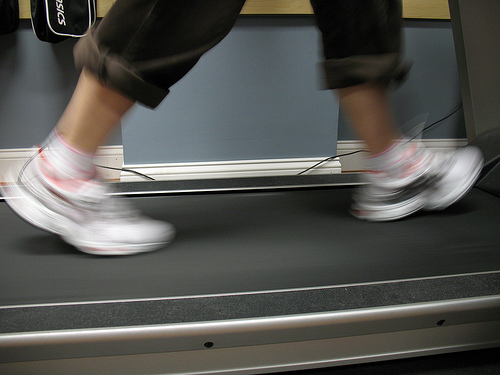
Why aren’t female heart attack survivors showing up for cardiac rehab?

by Carolyn Thomas  @HeartSisters

After a cardiac event, a 2-6 month program called cardiac rehabilitation can help survivors gradually improve their physical fitness, learn about nutrition, meet other heart patients, and get support to quit smoking,  lose weight or make other heart-healthy lifestyle changes to improve heart health. Cardiac rehab can reduce mortality by 25-40%, reduces angina symptoms, increases functional capacity, improves lipid (cholesterol) levels, reduces smoking by 25%, enhances psychological well-being, and improves exercise tolerance for all – including the elderly, frail or people with congestive heart failure.

Cardiac rehabilitation really works!  We know that completing a program of cardiac rehab can be very effective in reinforcing improved habits.  A 2001 University of Calgary research team lead by Dr. Kathryn King found that six months after finishing cardiac rehab, participants demonstrated higher health maintenance expectations and overall behaviour performance scores – and these indicators continued to improve over time.

But when I did a 4-month stint at cardiac rehabilitation after my own heart attack, I was vastly outnumbered by male participants, and was also one of the youngest in the group by at least two decades. Where did all the women go?  Continue reading “Why aren’t female heart attack survivors showing up for cardiac rehab?”
A heart patient’s guide to the three stages of chronic stress

gas gauge emptyby Carolyn Thomas    @HeartSisters

McGill University’s Centre for Studies on Human Stress at L’Hôpital Louis H. Lafontaine in Montréal is a remarkably helpful resource for those of you who are so chronically stressed day to day that you might be convincing yourself that this state of being is “normal”.

Anybody who has undergone ongoing chaos in the workplace, a family health crisis, a divorce, a death in the family, serious financial worries, too many deadlines, and many other realities can recognize the symptoms of chronic stress – but did you know that this low-grade stress is extremely damaging to our hearts?

In fact, the World Health Organization has predicted that stress-related disorders like heart disease and depression will soon be the top two leading causes of disability in adults. According to the Centre for Studies On Human Stress, there are three distinct stages of chronic stress.  See if any of these feel familiar:  Continue reading “A heart patient’s guide to the three stages of chronic stress”

How that ache may signal depression

by Carolyn Thomas

There is a disturbing link between women’s heart disease and depression.  Those suffering depression are more at risk for developing heart disease, and those diagnosed with heart disease are more at risk for suffering depression. The majority of depressed people never get help, however, partly because they don’t know that, along with emotional changes, their physical symptoms might also be caused by depression. Doctors may miss these symptoms, too:  Continue reading “How that ache may signal depression”

Depressed? Who, me? Myths and facts about depression after a heart attack

by Carolyn Thomas   ♥  @HeartSisters

I have a friend who has a friend who’s been depressed, off and on, for years. During that time, my friend and I have done our fair share of eye-rolling whenever the subject of this person’s depression came up. We wondered why she just couldn’t pull up her socks and quit all this self-absorbed moping around.

Neither my friend nor I had ever had one nanosecond of actually experiencing clinical depression ourselves – which, of course, didn’t stop us from passing judgement.  Continue reading “Depressed? Who, me? Myths and facts about depression after a heart attack”