
 by Carolyn Thomas ♥ Heart Sisters on Blue Sky
My family doctor once compared my uneasy adjustment since surviving a misdiagnosed heart attack to being like a stressful move to a foreign country.
I used to be pretty comfortable in my old country, pre-heart attack.
In my old country, I was a healthy, active, outgoing former distance runner. I had a wonderful family and a whack of close friends, a meaningful career I really loved, a crazy-cute cat, longtime community volunteer roles, a condo renovated top to bottom in a charming leafy neighbourhood of the most beautiful city in Canada – and a busy, happy, regular life.
Then on May 6, 2008, after being misdiagnosed and sent home from the Emergency Department despite textbook cardiac symptoms, I was finally admitted to the same hospital with a diagnosis of myocardial infarction – what doctors still call the “widowmaker” heart attack.
And that was the day I moved far, far away to a different country.
Breast cancer radiation oncologist Dr. Marisa Weiss described a similar move when she was, ironically, diagnosed with breast cancer herself one spring:
“Now I have dual citizenship in a country I never wanted to belong to.”
Eve Ensler, who wrote The Vagina Monologues, said this about her own cancer experience during a speech to a women’s conference in Long Beach, California:
“And when I wake up, I am in a new country. Nothing is familiar. Because the possibility of not dying is gone. Because I am now living in the land of the sick. Turns out my being a vegetarian- sober-nonsmoker-activist has not protected me at all.”
And the late author Christopher Hitchens told his Vanity Fair readers about the arrival of emergency paramedics at his home after he suddenly collapsed one day due to his cancer symptoms:
“Now that I view the scene in retrospect, I see it as a very gentle and firm deportation, taking me from the country of the well across the stark frontier that marks off the land of malady.”
As the late writer and activist Susan Sontag once wrote:
“Everyone who is born holds dual citizenship, in the kingdom of the well and in the kingdom of the sick.
“Although we all prefer to use only the good passport, sooner or later each of us is obliged, at least for a spell, to identify ourselves as citizens of that other place.”
The late Dr. Jessie Gruman, who spent more time than most as a hospital patient, wrote in her Prepared Patient Forum column and in her important book AfterShock: What to Do When the Doctor Gives You – or Someone You Love – a Devastating Diagnosis:
“Every time I have received bad health news, I have felt like a healthy person who has been accidentally drop-kicked into a foreign country: I don’t know the language, the culture is unfamiliar, I have no idea what is expected of me, I have no map and I desperately want to find my way home.”
Exiled to my own “foreign country” called Heart Disease, nothing around me felt familiar or normal anymore after I survived a heart attack. I was in a profound state of denial and shock. The simplest of tasks – like taking a shower or any other activity that includes lifting my arms above the head – now required a supreme effort and a 20-minute lie-down afterwards to recover.
I was fatigued and anxious at the same time, convinced by ongoing chest pain and shortness of breath that a second heart attack must be imminent. I felt a cold, low-grade terror on a daily basis.
And my worried family and friends could not and did not even begin to comprehend what was going on for me – because I could scarcely understand it myself. Sensing their distress, I tried to paste on my best PR smiley face around them so we could all pretend that everything was “normal” again. But making even minimal conversation felt so exhausting that it eventually seemed much easier to just avoid other people entirely.
I also felt deeply ashamed that I just could not seem to pull myself together.
As U.K. physician Dr. Jonathon Tomlinson recently described this isolation-seeking side effect of depression:
“Shame is strongly associated with depression, but even more strongly associated with social anxiety; we fear revealing our shame, and so we withdraw from the world.”
Instead of feeling happy and grateful because I had survived what many do not, I frightened myself by weeping openly over nothing in particular. I couldn’t seem to concentrate on anything. I slept in my clothes. I didn’t care how I looked or how I smelled. I had no interest in reading, walking, talking, or getting out of bed. Everything seemed like just too much trouble.
And every night at bedtime, I quietly (and unconsciously) prepared for my own death overnight.
What was wrong with me? Why wasn’t I able to just snap out of it?
One day, at about the seven week post-heart attack mark, I finally felt like I had had quite enough of this heart disease, thank you very much. In a fit of pique, I marched around the apartment gathering up get well cards and bouquets of flowers and anything else that reminded me or my family or anybody else that some kind of invalid lived here. I tossed all of them into the trash, and waited to feel better.
It didn’t work. The apartment, however, did look a whole lot tidier.
Worse, none of this felt like like my real self, like my real life, like my real world. I began to fret that the old me was truly gone. Would I ever get it back? Maybe if I could just return to work, maybe then I might once again feel ‘normal’ again during a time when nothing about this new country felt normal.
It took three long months after my heart attack before I received medical clearance to attempt a return-to-work trial, half-days only to start. By then, I had used up all my vacation days and all my sick time, and could no longer afford to stay home from my public relations position at our local hospice palliative care society. And I felt absolutely desperate to get back to work.
But I realized within the first week back at the office, after all the ‘welcome back’ hugs and solicitous fussing by my colleagues had faded, about the same time that multiple project deadlines started to pile up alarmingly, that I was simply no longer able to function in my old PR life.
More anxiety, more weeping, more chest pain. I don’t know how I made it, but I somehow hung on for a full month before my doctor finally ordered an extended medical leave. Worse, in order to survive financially, I had to face the humiliating option of applying for longterm disability benefits – which meant I had to get my brain wrapped around the reality that I – ME of all people! – would be termed “disabled”.
Leaving work felt almost worse than suffering through the workday stress. As weeks turned into months, my hope of returning to my old pre-heart attack self dimmed as the reality of life in this new country of mine sank in.
Where once I had been competent, I now felt unsure.
Where I had once made decisions with lightning speed, I now seemed incapable of making even the most insignificant choice.
I was seeing my physician on a weekly basis by now, then referred to the Regional Pain Clinic to address the debilitating chest pain of what doctors call refractory angina, then re-admitted to the hospital for another cardiac procedure, then newly-diagnosed with Inoperable Coronary Microvascular Disease (MVD), then started seeing a therapist, and was prescribed more and more drugs to help get me through this state of anguish, pain and despair.
My once-busy life had become reduced to what I called ‘one-outing’ days, ‘two-outing’ days, or (rarely) ‘three-outing’ days. Any outing – a doctor’s appointment, a walk to the pharmacy, meeting a friend for coffee – is followed immediately by two hours back home flaked out on the couch in order to recuperate from the bone-crushing fatigue, shortness of breath and chest pain brought on by the outing. Going out in the evenings has become almost unbearable, and when we do, I have to rest up for hours in preparation, and usually need the full next day to recover.
The distress of adjusting to such a debilitating change to one’s life is hard to describe to those who have never experienced it. Yet there are travel agents and tour guides here who actually have tools to help us along the journey – although I’ve personally never met them.
For example, we know that we have at least 12 measurement surveys available to the medical profession that look at factors like “the search for meaning in chronic illness”.
These surveys have been used for many patients being treated for AIDS or cancer, such as the Psychosocial Adjustment To Illness Inventory or the Meaning of Illness Questionnaire. But a 2008 study found that limiting factors in the success of these tools included “the infrequent use of these instruments clinically or in research.”
So I can’t help but ask:
“Why are these readily available psychosocial tools not being administered routinely to heart patients during post-cardiac recovery?”
And where are the models of “survivorship“ care plans for heart patients that are so well-entrenched in the oncology world of cancer survivors?
With much backsliding, and my newly revised cardiac diagnosis of MVD, I’ve had to learn through painful practice the fine art of p-a-c-i-n-g throughout each day.
I have now found that most days, I can actually function pretty well as long as I remember to balance every single activity each day with an even longer period of rest.
And, as Susannah Fox wrote:
“It’s not surprising that when someone gets dropped into this kingdom of the sick, they grab their phones, they grab their laptops, they grab their loved ones, and they go.
“They go into that unfamiliar area of a new diagnosis, a new drug, a new treatment. They consult experts. They call and search and text. They band together and form posses, pioneers sharing maps with newcomers.”
That’s what I did. I researched women’s heart disease like I was cramming for a cardiology midterm. I was trying to figure out why an Emergency physician with the letters M.D. after his name had sent me home with an acid reflux misdiagnosis – despite presenting with my textbook heart attack symptoms, and why so many other women were also being misdiagnosed like me, too.
While researching this on the Mayo Clinic website, I learned about the annual WomenHeart Science & Leadership Symposium for WomenWith Heart Disease held each year at Mayo in Rochester, Minnesota. I applied to attend – and I then became the first Canadian ever accepted to attend this prestigious patient advocacy training.
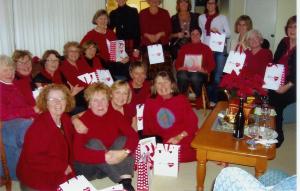
After returning home to the West Coast, I began sharing what I’d just learned at Mayo to small groups of women at what I called my “Pinot & Prevention” potluck parties – as my health allowed. My speaking invitations grew to include conferences, universities and major hospital fundraising events. My Mayo Clinic training brought speaking and interview invitations that would never have come without that Mayo street cred.
I launched this site, Heart Sisters. And I spent two years writing a book published by Johns Hopkins University Press called “A Woman’s Guide to Living with Heart Disease” based on some of the most popular of hundreds of Heart Sisters articles here.
My public relations friends tease me that this is just what happens when a PR person has a heart attack. We keep on doing what we’ve always done, what we know how to do best: writing and speaking and looking stuff up.
On top of taking a whack of cardiac meds each morning, my Coronary Microvascular Disease chest pain symptoms are being addressed now by doses of my trusty nitro spray (don’t leave home without it!) plus my Pain Clinic specialists and my Pain Self-Management classes.
In this new country called heart disease, the culture here demands a profound respect for prioritizing.
This means learning new customs, like putting myself and my physical/mental/emotional health needs first. This seems to be harder than you’d think, particularly for women. (See also: Are You a Priority In Your Own Life?)
It means learning how to nap like a pre-schooler, or just sit and have a rest when I need to. It means learning to limit social contact to those who lift my spirits, make me laugh, or bring me home baking. It means learning how to say “NO!“ to a lot of things, from Tim Horton’s maple dips to those ‘energy vampire’ people who can suck the life right out of you.
At first it was extremely painful, as a newly arrived citizen in this new country, to learn that those still living in my old “country of the well” – as Hitchens calls it – are doing just fine without me. My work colleagues, for example, have somehow managed to keep the place running perfectly fine even though I’ve now been gone for years. The world has continued to spin on its axis, even without me being in charge. As the old saying goes:
“The graveyards of the world are filled with indispensable people!”
And in the words of Susannah Fox:
“The number one thing that people try to do is to get the hell out of the kingdom of the sick and back to the kingdom of the well.”
Many of us will in fact get back. Eventually. Mostly. But some of us have been forced to permanently surrender our passports, and will not.
Welcome to the new country.
♥
.
© Carolyn Thomas – Heart Sisters www.myheartsisters.org
This essay was also published by Stanford University School of Medicine in SCOPE
 This post was also published as a guest post on The Mighty
.
* Drew Leder. Illness & Exile: Sophocles’ Philoctetes. Literature & Medicine 9. 1-11. ©1990 The Johns Hopkins University Press.
Q: Are you living with chronic or debilitating illness? Take this Mayo Clinic-based ‘Burden of Treatment’ Survey.
♥
NOTE FROM CAROLYN: I wrote more about adjusting to a life-altering diagnosis in my book, A Woman’s Guide to Living with Heart Disease (published by Johns Hopkins University Press). You can ask for it at your local library or favourite bookshop (please support your independent neighbourhood booksellers!) or order it online (paperback, hardcover or e-book) at Amazon, or order it directly from Johns Hopkins University Press (use their code HTWN to save 30% off the list price).
See also:
Living With the “Burden of Treatment”
“We Are All Patients.” No, you’re not.
Depressing News about Depression and Heart Disease
How Women Can Have Heart Attacks Without Any Blocked Arteries
Not Just For Soldiers Anymore: Post Traumatic Stress Disorder After A Heart Attack
Women Heart Attack Survivors May Be as Psychological Traumatized as Victims of Violence
Top 10 Tips From the Author of ‘How to be Sick’
.
 Heart Sisters
Thank you very much for this post. I’m four months away from an MI and subsequent quintuple (yes, five!) bypass surgery.
I’ve struggled with how different this current “me” is from the dynamic woman I was. This post helped me not only in understanding myself but also to explain myself to my children whose loving acceptance I so appreciate today.
I mentioned you on my blog which was intended to document a girl’s road trip west but ended up recording the entire process I’m in.
Thanks again!
LikeLiked by 1 person
Thanks so much for sharing your perspective here, Wanda. You are in very early days yet. My own MI was in 2008, yet I still sometimes ponder the mystery of what happened to that “old” me, pre-heart attack. I now try to view it through a more Buddhist lens (“what is, is…”) because I believe it’s just way easier to face reality than to keep flailing against it. It’s the “new normal” that patients so often talk about. Next Sunday’s post is all about making judgements (including about ourselves) – you might relate to that one, too. Thanks for mentioning my writing on your blog!
LikeLike
Carolyn, I couldn’t agree more with every word. Moving to a ‘new country’ (new planet?) completely captures how I too felt after diagnosis. I don’t have heart disease, but my own diagnosis means I can sure relate to every sentiment here. I often miss my old country too.
LikeLiked by 1 person
Reblogged this on New And Hot.
LikeLiked by 1 person
Absolutely beautifully told. Thank you so much for this profoundly important essay. You are telling my story here, too.
LikeLiked by 1 person
You are telling MY story here. Just incredible to read words that have been inside me since my own cardiac event but unable to articulate until I saw them here. I am completely overcome with emotion as i write this. Thank you a thousand times for your wonderful website! Wish I’d found this last year, better late than never.
sincerely
M.M. in L.A.
LikeLiked by 1 person
A “new country” is the perfect way to describe the journey I’ve been on for the past six months. Hard to put into words until I read this article. Interesting that this language seems so universal among others diagnosed with serious or life-limiting disease.
LikeLiked by 1 person
Hi Carolyn,
I am new to these websites and support groups. Yours was the first one that I read. I cannot thank you enough for putting into words everything that I have felt and thought through these last four years.
I am 51 years old and have 1 bypass, 2 stentings, 4 heart caths and an overload of testing in one year’s time. The prior 3 years were spent with misdiagnosing and severe frustrations from being told I was “too young to have this disease” and that I was experiencing “rib cage pain” (far from it!).
You have put into writing every emotion I have had. My one silver lining of being in this “new country” has been that it has brought me closer to my mother and husband, both of whom have been by my side and allowed me to have that up and down spiral of emotion that comes with heart disease. I am blessed that they are here.
Thank you again for writing these words. I was directed to this web site by a family friend and I shall be forever grateful!
Beth
LikeLiked by 1 person
Thank you Carolyn.
Well said!! You are always able to put into words what the rest of us just try to get a handle on. I truly enjoy reading your posts.
Take care — Gloria —
LikeLiked by 1 person
I agree Gloria. This essay is exquisite. Well done, Carolyn. You have somehow utterly captured the patient’s arrival in this new country, like the professional and experienced “tour guide” you are.Absolutely wonderful writing here. Love your whole website, but this post tops the list.I salute you!
LikeLiked by 1 person
Carolyn, I love this post and how you put anxiety and adjustments we have to make to a new reality. Beautifully described and written; it will be helpful to many coping with other illnesses, too. Thank you.
LikeLiked by 1 person
Cried from the beginning to the end and forwarded it to my husband in hopes he can finally understand what happened to his wife.
Pattie
LikeLiked by 1 person
Thanks so much to each of you who have commented so far – I’m truly touched by your response to this essay.
cheers,
C.
LikeLike
Carolyn,
Beautiful post. I need to print this out and read it and reread it.
Nearly 13 years after my cardiac arrest, I am now admitting that I need to own my citizenship in this land fully, and realize I’m not going back to the old place.
LikeLiked by 1 person
Carolyn:
A heart-felt column.
I think you conveyed the apocalyptic landscape after a heart attack well, and it is helpful to hear of the similarity of our journeys.. (…Although I think it is more like being deported to a foreign planet than moving to a foreign country…)
LikeLiked by 1 person
Carolyn,
Thanks for your very honest description of your post MI journey.
I’m sure you have helped many others realize that they are not alone in dealing with these feelings.
Carol
LikeLiked by 1 person
You said it so well. I cried all the way through it.
It seems the tears are never very far away, still. I find that even as I learn my way around, can now speak the language and am learning to even enjoy the cuisine, I am always a little homesick.
Like Mary said, I’m happy to be a citizen anywhere, more grateful than I can say to be here one more day.
Thanks Carolyn. Love, Allie
LikeLiked by 1 person
I wept when I got to the end of this and I’m not even a heart attack survivor. I’ve learned so much today. Thank you.
LikeLiked by 1 person
Beautifully expressed.
The old country and the new country. We were brides, taken away without choice, as my grandmother was in 1918 or so. There was no anticipation of emigration, or of the dreams of the future. We took no oath of happy citizenship ~ it was the trip of survival; like boat people. Yet, there can be happiness on these shores when we accept…
I don’t think you ever really stop looking back on the old country with wistfulness, sadness and envy. But, you adjust and look for other veins of gold in the dirt of the new country. Perspective takes time, and willingness to have it, and the gratitude to be a citizen anywhere, at all.
LikeLiked by 1 person
Thanks Mary. I love your analogy of war brides and boat people.
cheers,
C.
LikeLike