
A foreshortened future

heart cloud

by Carolyn Thomas   @HeartSisters

Cardiac psychologist and heart attack survivor Dr. Stephen Parker recently described a symptom of Post Traumatic Stress Disorder that rang a bell for him after his own cardiac event. The PTSD symptom is called “a sense of a foreshortened future“. In other words, after a traumatic event – in this case, a heart attack – the patient “does not expect to have a career, marriage, children, or a normal life span.”  As Dr. Steve tells his own story of this symptom:

“Three months after the heart attack, I went to Home Depot to buy something for the house. I walked inside, saw the plethora of nice things to make a nice house, and started feeling extremely depressed.

“What was the point? I knew I was going to die within a short time.   Continue reading “A foreshortened future”

“I’m not depressed!” – and other ways we deny the stigma of mental illness after a heart attack

by Carolyn Thomas  @HeartSisters

“This is the most thorough review article I have seen on psychological interventions after heart events,” writes cardiac psychologist Dr. Stephen Parker* about a U.K. study on heart patients. And he should know. Dr. Steve is also a heart attack survivor himself who has explored his own profound experiences with the depression and anxiety that commonly accompany any cardiac event.

The study, reported in the British Journal of Cardiology in July 2010, followed over 400 London heart patients for two years – of whom at least half showed symptoms of anxiety or depression when first interviewed.  But the study authors described their participants in this way:

“Many of these heart patients were reluctant to accept a diagnosis of anxiety or depression and expressed reservations to the clinical psychologist by rejecting the term ‘depression’ for describing their problems, or by expressing negative views about attending a mental health service for treatment.”

In fact, these ‘negative views’ associated with the stigma of having mental health problems were so strong that all psychological interventions studied were provided to heart patients as part of a scheduled Cardiac Rehabilitation program at St. Thomas’s Hospital in London – instead of at a mental health facility.   Continue reading ““I’m not depressed!” – and other ways we deny the stigma of mental illness after a heart attack”

Which one’s right? Eight ways that patients and families can view heart disease

by Carolyn Thomas   ♥  @HeartSisters

An interesting phenomenon that I used to observe in bereaved family members during my years working in hospice palliative care is the range of personal grieving styles, and the resulting conflicts over the “right way” to grieve.     Continue reading “Which one’s right? Eight ways that patients and families can view heart disease”

My love-hate relationship with my little black box

by Carolyn Thomas    @HeartSisters

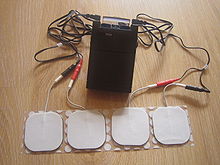
Every morning, I clip it onto my belt, or tuck it into a hip pocket.  I very carefully attach its sticky little electrode pads onto the skin just over my heart, tucking their long black wires under my clothing. Lately, I also have to hold the electrodes in place on my skin with surgical tape because they’re starting to lose their stickiness after so much daily wear. I turn on the black box at my waist, and adjust its two knobs to the correct power levels. I feel a prickly little buzz pulsating across my chest.

It’s called Transcutaneous Electrical Nerve Stimulation (TENS), and it involves electrical impulses called neuromodulation to treat the chest pain (angina) of Inoperable Coronary Microvascular Disease (MVD) – a disorder of the smallest of the coronary arteries (too small to stent, too small to bypass).

My portable TENS unit is about the size of an average cell phone. You may know the much larger version of this machine if you’ve ever had physiotherapy treatments following a muscle injury.  The only wounded muscle it’s working on for me now, however, are those in my heart. Emerging cardiac research is showing that, just as the TENS machine works on improving blood flow, reducing inflammation and speeding up healing for an injured shoulder or knee, it may bring the same benefits to heart patients with MVD like mine.

But I do have a love-hate relationship with my little black box.  Continue reading “My love-hate relationship with my little black box”